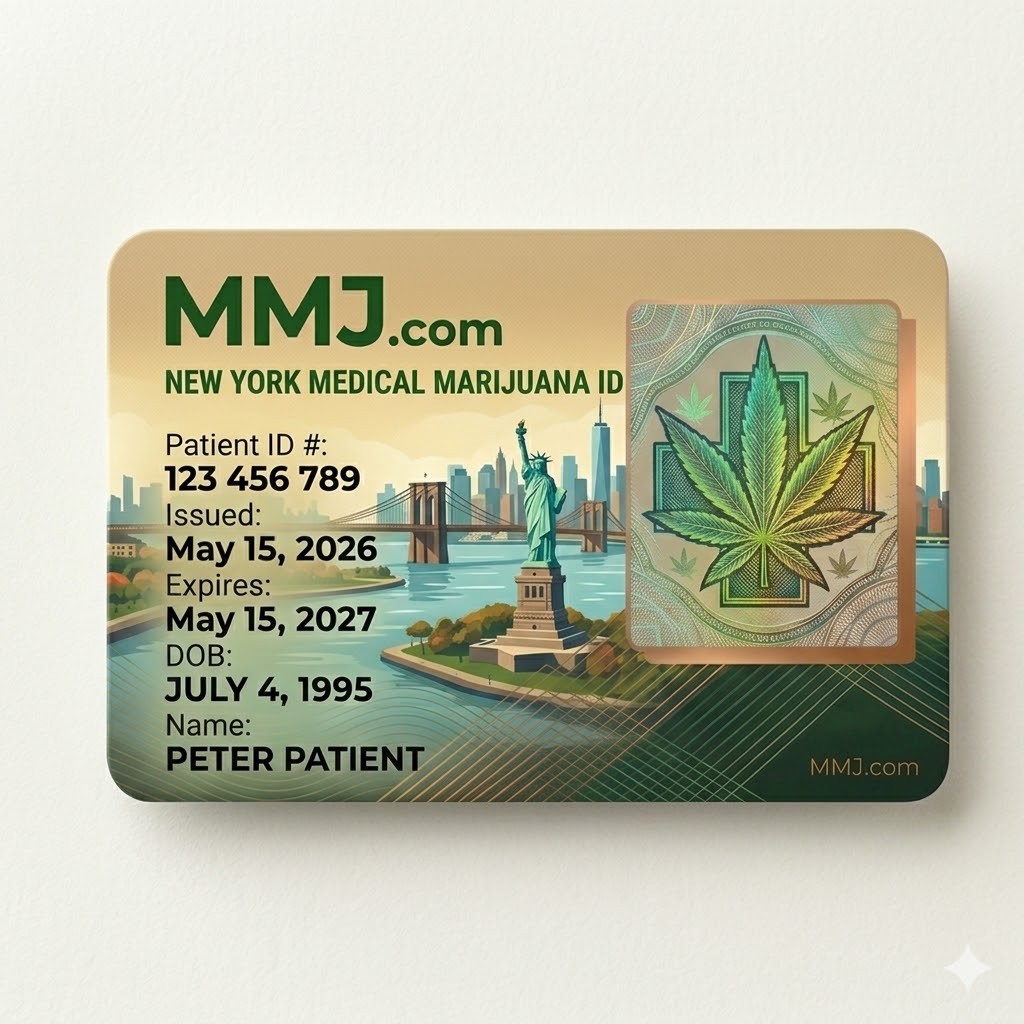
New York Medical Marijuana Card: Complete Guide
New York Cannabis Tax & Regulation Matrix
| Program Metric / Feature | Recreational Adult-Use | Registered Medical Patient |
|---|---|---|
| Retail Cannabis Excise Tax | 9.0% Added at Checkout | 0% (100% Tax-Exempt) |
| Local Municipal Option Tax | 4.0% Added at Checkout | 0% (100% Tax-Exempt) |
| Total Cumulative Tax Stack | 13.0% Added at Register | 0% (100% Tax-Free) |
| State Registration Fee | N/A | $0.00 (FREE) |
| Public Possession Allotment | 3.0 oz Flower / 24g Concentrate | Up to a 60-Day Supply (Whichever is greater) |
| Minimum Access Age | 21+ | 18+ |
2-Year Financial Savings Forecast (Based on a $250/month budget)
- 2-Year Estimated Recreational Total Tax Expenses (13%): ~$780.00
- 2-Year Estimated Medical Total Tax Expenses (0%): $0.00
- Program Setup Investment (MMJ.com Evaluation Fee): $149.99
- Net 2-Year Financial Savings: $630.01 Saved
New York Medical Cannabis Quick Facts
- MMJ.com Practitioner Fee: $149.99
- State Application & Registry Fee: $0.00 (FREE)
- Physical Card Cost: N/A (Physical cards fully discontinued in favor of the automated barcode system)
- Certification Validity Window: 2 Full Years
- Refill Policy Threshold: Patients can purchase standard refills when they have 7 days or less of medication remaining on their current 60-day allocation block.
Statutory Patient Labor Law Protections
Under New York Labor Law Section 201-D and the Compassionate Care Act, certified medical cannabis patients receive some of the strongest employment protections in the nation:
- Anti-Discrimination Mandate: New York employers are strictly prohibited from refusing to hire, terminating, or otherwise penalizing an employee or applicant based on their status as a certified medical cannabis patient or for legal, off-duty cannabis use outside of workplace hours and premises.
- Safety & Federal Exemptions: These statutory protections do not apply if an employer would face a direct breach of federal law, forfeit a federal infrastructure contract, or if the patient holds a safety-sensitive role governed by federal Department of Transportation (DOT) drug testing mandates. Active impairment while on the clock is strictly unprotected.