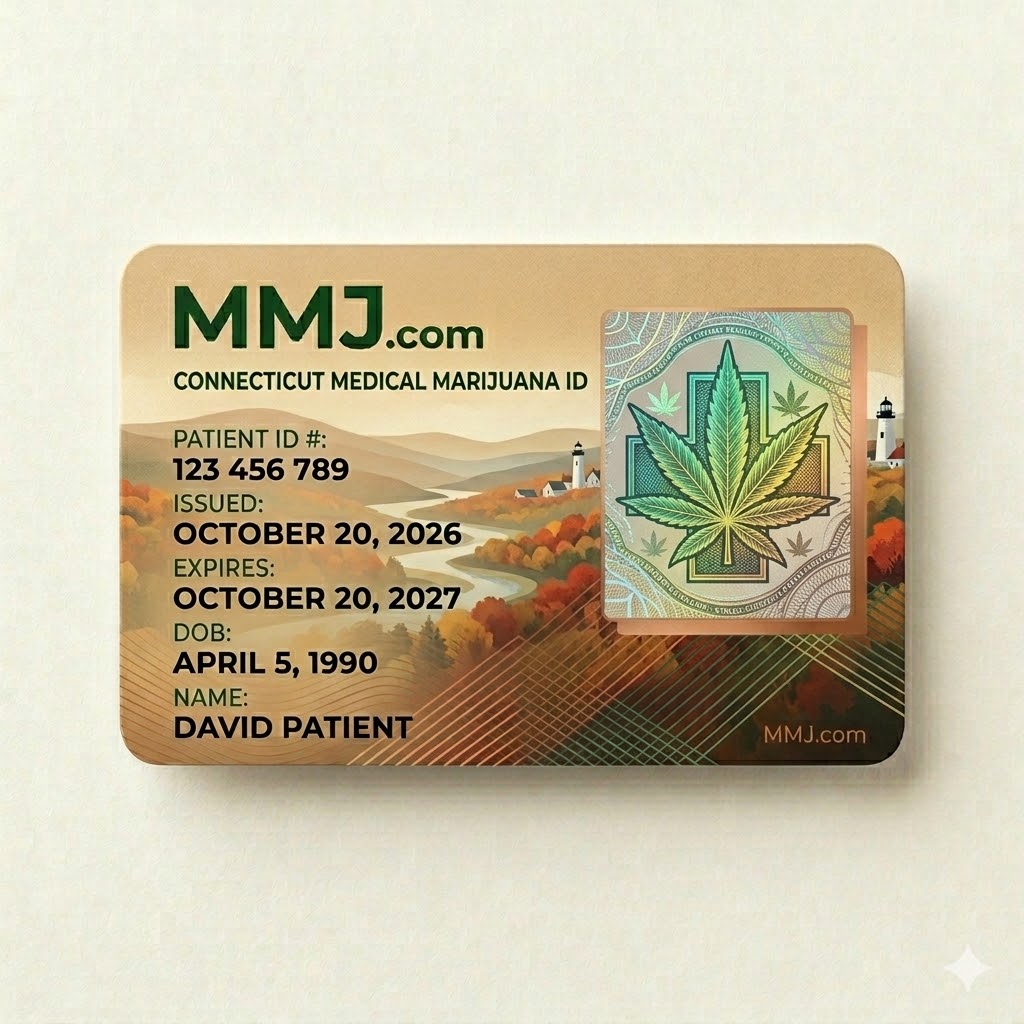
Connecticut Medical Marijuana Laws and Regulations
Connecticut Cannabis Laws: Complete Guide 2026
Connecticut legalized recreational cannabis through SB 1201 (Public Act 21-1), the Responsible and Equitable Regulation of Adult-Use Cannabis Act (RERACA), signed into law on June 22, 2021. Adult-use retail sales began January 10, 2023. The state's medical marijuana program has operated since 2012.
Key Legislation
| Law | Citation | Effective Date |
|---|---|---|
| Palliative Use of Marijuana Act (PUMA) | Conn. Gen. Stat. § 21a-408 et seq. (Public Act 12-55) | 2012 |
| Responsible and Equitable Regulation of Adult-Use Cannabis Act (RERACA) | Conn. Gen. Stat. § 21a-420 et seq. (Public Act 21-1, SB 1201) | July 1, 2021 |
| Home Cultivation Amendment | Public Act 21-1 | July 1, 2023 |
| Cannabis-Infused Beverage Regulations | Public Act 24-76 | 2024 |
Regulatory Agencies
Connecticut cannabis regulation is overseen by multiple agencies:
Department of Consumer Protection (DCP)
- Website: portal.ct.gov/cannabis
- Oversees licensing and compliance
- Medical marijuana patient registration
Social Equity Council
- Promotes equity in cannabis industry
- Reviews license applications
- Community reinvestment programs
Adult-Use Cannabis (21+)
Under Conn. Gen. Stat. § 21a-420, adults 21 and older may:
Possession Limits:
- 1.5 ounces of cannabis on your person
- 5 ounces stored at home (must be in locked container or space)
- Cannabis products equivalent to 5 grams THC (edibles, concentrates)
Home Cultivation (as of July 1, 2023):
- Up to 3 mature (flowering) plants per person
- Up to 3 immature (vegetative) plants per person
- Maximum 12 plants per household (if 2+ adults)
- Plants must be in an enclosed, locked space
- Not visible from public areas
- Only adults 21+ may cultivate
- Must use your own residence
Prohibited Activities:
- Public consumption (fine: $100-500)
- Consumption in motor vehicles
- Providing cannabis to persons under 21
- Possession on school grounds
- Consumption at workplace (unless permitted)
- Exceeding possession limits
Medical Marijuana Program (PUMA)
Connecticut's medical marijuana program operates under the Palliative Use of Marijuana Act (PUMA), Conn. Gen. Stat. § 21a-408.
Qualifying Conditions:
- Cancer
- Glaucoma
- HIV/AIDS
- Parkinson's disease
- Multiple sclerosis
- Damage to spinal cord nervous tissue
- Epilepsy
- Cachexia/wasting syndrome
- Crohn's disease
- Post-traumatic stress disorder (PTSD)
- Chronic pain lasting 6+ months
- Severe nausea
- Severe muscle spasms
- Sickle cell disease
- Post laminectomy syndrome with chronic pain
- Severe psoriasis and psoriatic arthritis
- Amyotrophic lateral sclerosis (ALS)
- Ulcerative colitis
- Complex regional pain syndrome
- Cerebral palsy
- Cystic fibrosis
- Irreversible spinal cord injury with objective neurological indication
- Terminal illness requiring end-of-life care
- Uncontrolled intractable seizure disorder
- Tourette syndrome
- Opioid use disorder (for cannabis-based medication)
Medical Patient Benefits:
- Higher possession limits (up to 2.5 ounces per 30 days)
- Lower taxation (exempt from adult-use taxes)
- Priority service at hybrid dispensaries
- Home cultivation rights
- Employment protections under PUMA
- Access to higher potency products
Patient Registration
Requirements:
- Connecticut resident
- Physician or APRN certification
- Complete online application via DCP portal
- Provide ID and proof of residency
- Pay registration fee: $100 (or $25 reduced fee for qualifying individuals)
Card Validity: 1 year from issuance
Taxation
Adult-Use Cannabis:
- 6.35% state sales tax
- 3% local municipal tax
- THC-based excise tax: $0.00625 per mg THC for flowers, $0.0275 per mg for edibles
- Total effective tax rate: Approximately 20-25%
Medical Cannabis:
- Exempt from adult-use excise taxes
- Standard 6.35% sales tax applies
- Reduced pricing at dispensaries
Penalties for Violations
Adults 21+ Civil Penalties:
| Violation | Penalty |
|---|---|
| 1.5 - 5 oz (outside home) | $100-$500 fine |
| Public consumption | $100-$500 fine |
| Consumption in vehicle | $100-$500 fine |
| Providing to 18-20 year old | Infraction, $500 fine |
Criminal Penalties: Under Conn. Gen. Stat. § 21a-279:
| Offense | Classification | Penalty |
|---|---|---|
| Possession > 5 oz (non-medical) | Class A Misdemeanor | Up to 1 year, $2,000 fine |
| Distribution without license | Felony | Up to 5-20 years |
| Distribution to minor under 18 | Felony | Enhanced penalties |
| Sale near school | Felony | Mandatory minimum sentences |
Driving Under the Influence
Driving under the influence of cannabis is prohibited under Conn. Gen. Stat. § 14-227a.
Connecticut uses a behavioral impairment standard. There is no per se THC limit, but law enforcement may test for impairment.
DUI Penalties:
- 1st offense: License suspension 45 days, IID required, potential jail up to 6 months, $500-1,000 fine
- 2nd offense: License suspension 45 days, 120 days jail (mandatory 48 hours), $1,000-4,000 fine
- 3rd offense: Felony, up to 3 years prison, $2,000-8,000 fine
Medical patients are NOT exempt from DUI laws.
Employment Rights
Under PUMA, medical marijuana patients have workplace protections:
- Employers cannot discriminate against registered patients solely for patient status
- Employers cannot refuse to hire based on medical marijuana patient status alone
- Employers may prohibit use/impairment during work hours
- Employers may maintain drug-free workplace policies for safety-sensitive positions
- Federal contractors may have different requirements
Adult-use consumers have LIMITED employment protections.
Dispensary Information
Connecticut operates a hybrid dispensary system serving both medical and adult-use consumers.
Finding a Dispensary:
- Use the DCP Licensed Retailers list
- Medical patients receive priority service
- Verify license status before purchasing
Social Equity Program
Connecticut's cannabis law includes significant social equity provisions:
- Social Equity Council reviews licenses
- Priority licensing for equity applicants
- 50% of licenses reserved for social equity applicants
- Community reinvestment from tax revenue
- Business assistance and training programs
- Record expungement for certain cannabis offenses
Local Regulations
Under RERACA, municipalities may:
- Opt out of adult-use retail sales via referendum
- Establish zoning requirements and buffer zones
- Collect 3% local tax on adult-use sales
- NOT prohibit personal possession or home cultivation
- NOT restrict medical marijuana access
Key Resources
- Connecticut Cannabis Portal: portal.ct.gov/cannabis
- Medical Marijuana Program: DCP Medical Marijuana
- Patient Registration: PUMA Patient Portal
- Social Equity Council: portal.ct.gov/cannabis
- Connecticut General Statutes: cga.ct.gov
- Licensed Retailers: Available on Cannabis Portal
Timeline of Legalization
| Date | Event |
|---|---|
| 2012 | PUMA enacted (medical marijuana) |
| 2012 | Possession under ½ oz decriminalized |
| June 22, 2021 | SB 1201 signed (adult-use legal) |
| July 1, 2021 | Personal possession legal (21+) |
| January 10, 2023 | Adult-use retail sales begin |
| July 1, 2023 | Home cultivation permitted |
| 2024 | Cannabis-infused beverage regulations enacted |
This information reflects Connecticut cannabis laws as of December 2025. Always consult official state sources and legal counsel for the most current requirements.