MMJ.com
Georgia Licensed Telehealth Provider

Georgia Medical Marijuana Laws & Regulations 2026

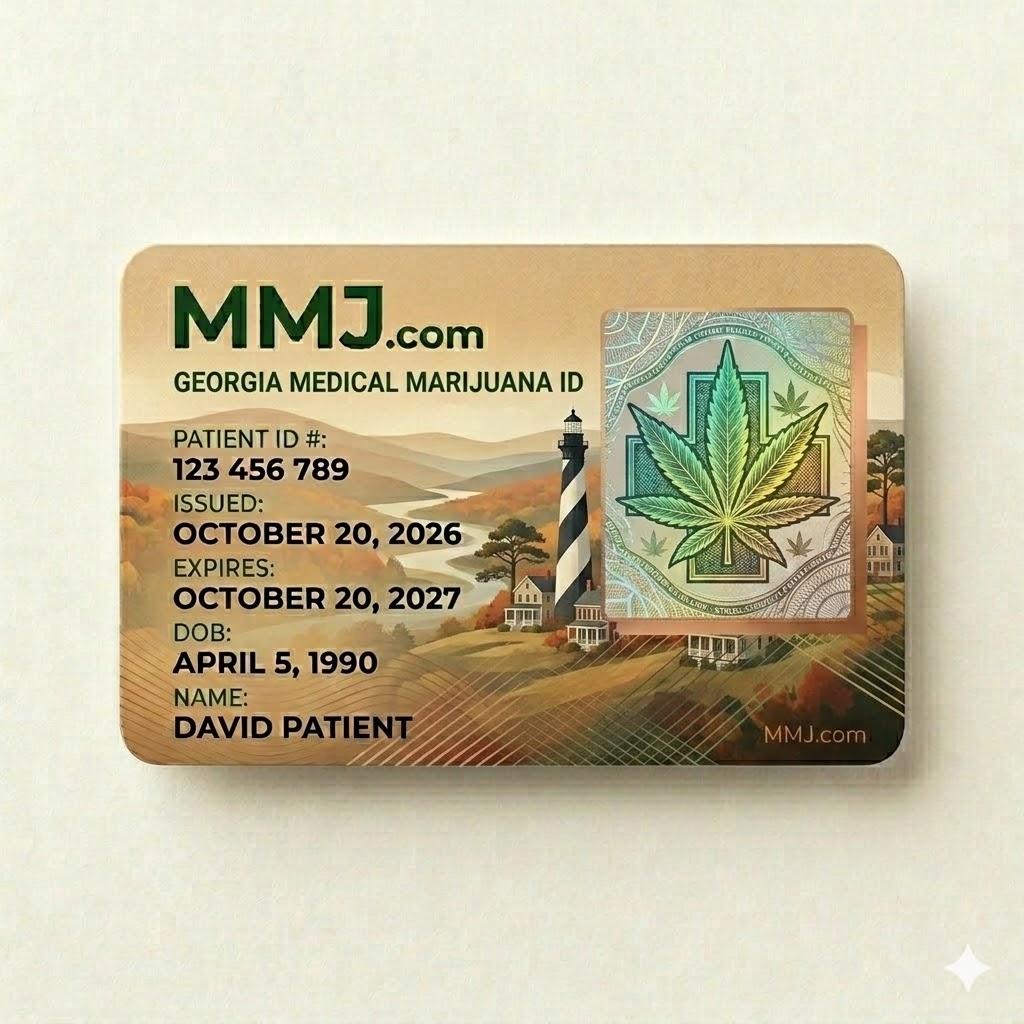
Get your Georgia medical marijuana card (also known as a Medical Cannabis Registry card) online. Under SB 220 (effective July 1, 2026), your five-year digital registry card authorizes the purchase of oils, tinctures, capsules, transdermal patches, lotions, vape cartridges (patients 21+), and concentrates (patients 21+) at licensed independent pharmacies. Raw smokable flower and edible food products remain prohibited.

Book Your Evaluation

$149.99

Doctor evaluation fee

Licensed Georgia physician
Same-day certification
5 years card validity
100% money-back guarantee
Book Appointment →

HIPAA Compliant • Secure

+ $30 state registration fee (paid separately)

Medically Reviewed & Verified for Georgia Law

By Dr. Kevin Kargman, DOLicensed GA Physician #89956

Audited: January 1, 2026

Your Georgia Medical Marijuana Physicians

State-licensed physicians certified for medical marijuana evaluations

Dr. Johnathan Miller

Dr. Johnathan Miller, MD

Georgia License: #100943

NPI: 1235623372

View full credentials
Dr. Carla Antola

Dr. Carla Antola, MD

Georgia License: #83572

NPI: 1568654101

View full credentials
Dr. Gaurav Patel

Dr. Gaurav Patel, MD

Georgia License: #98059

NPI: 1023571379

View full credentials

All evaluations conducted by state-licensed physicians

10K+
MMJ Patients Certified
★★★★★
4.9/5 · 172 Reviews
15 min
Average Wait
Simple 3-Step Process

How to Get Your Georgia MMJ Card

No appointments needed. No waiting rooms. Just fast, professional medical evaluations from home.

Complete Registration

Fill out our secure intake form with your medical history. Takes about 5 minutes.

Phone or Video Call

Connect with a Georgia cannabis doctor online via secure phone or video.

Get Certified

Receive your certification instantly. Register with the state to get your card.

Why MMJ.com?

The Trusted Choice for Georgia Patients

100% Money-Back Guarantee

If you're not approved, you get a full refund. No questions asked.

State-Licensed Physicians

All our doctors are licensed to practice in Georgia and specialize in cannabis medicine.

Same-Day Certifications

Most patients receive their certification within hours of their evaluation.

100% Secure Video Telehealth

Connect securely via any smartphone, tablet, or laptop from the comfort of your couch.

24/7 Support

Our patient care team is available around the clock to answer your questions.

Easy Renewals

When your card expires, renewing is even easier than the first time.

Georgia Medical Marijuana Laws and Regulations

Georgia Medical Cannabis Laws: Medical Cannabis Program Overview

Important: Adult-use marijuana is not legal in Georgia. The state permits the legal possession of medical cannabis products by registered patients through the Georgia Medical Cannabis Registry, administered by the Georgia Department of Public Health under OCGA §31-2A-18.

Key Legislation History

Haleigh's Hope Act (HB 1, 2015)

The foundation of Georgia's medical cannabis program, named after Haleigh Cox, a young patient with severe epilepsy:

  • Established the Medical Cannabis Registry
  • Authorized possession of cannabis oil containing no more than 5% THC by weight (the legacy potency cap, eliminated by SB 220 in 2026)
  • Created initial list of qualifying conditions
  • Administered by Georgia Department of Public Health
Georgia's Hope Act (HB 324, 2019)

Expanded the program significantly:

  • Authorized in-state cultivation and production of medical cannabis
  • Established the Georgia Access to Medical Cannabis Commission (GMCC)
  • Licensed dispensaries (called "pharmacies") to distribute products
  • Created a regulatory framework for production and distribution
SB 220 (The Putting Georgia's Patients First Act, 2026)

Signed by Governor Brian Kemp on May 13, 2026 and effective July 1, 2026, SB 220 fundamentally restructured the program:

  • Eliminated the 5% THC potency cap and the CBD-balance requirement
  • Replaced the percentage cap with a 1,200 mg per-package THC ceiling and a 12,000 mg cumulative THC possession cap across all products
  • Newly permitted vape cartridges and concentrates for patients 21 and older
  • Introduced 45-day out-of-state medical card reciprocity
  • Deleted the legacy MMJ-specific 20-160 fluid-ounce felony tier and the 160+/31,000+/154,000+ fluid-ounce trafficking tiers; over-limit possession now falls under O.C.G.A. Title 16 Chapter 13 standard controlled-substances penalties
  • Dry-county dispensing-location restriction with a pharmacy exemption (O.C.G.A. §3-3-21(a)(1)): as of July 1, 2026, no Commission-issued medical cannabis dispensing license may be granted in any location where the retail sale of distilled spirits is prohibited under §3-3-21(a)(1). Licenses issued by the State Board of Pharmacy are expressly exempt, giving Georgia's independent pharmacies a statutory footprint advantage in dry counties and dry precincts where standalone dispensaries cannot operate.
  • PDMP check requirement for pharmacists (O.C.G.A. §16-12-230(b)): pharmacists dispensing medical cannabis must first query the Georgia Prescription Drug Monitoring Program before completing a dispense, a patient-safety guardrail that aligns medical cannabis with how other scheduled medications are handled in pharmacy practice.
  • Dual-track dispensing-license framework preserved (O.C.G.A. §16-12-206): SB 220 did not change who issues dispensing licenses. Either the Georgia Access to Medical Cannabis Commission OR the State Board of Pharmacy may issue a dispensing license, so the Commission's standalone dispensary track and the SBP's pharmacy track continue to operate side by side under the same statute.
  • Caregiver-definition expansion: the eligible-caregiver definition was expanded from the legacy parent / guardian / legal custodian category to three categories: (A) parent / guardian / legal custodian (retained), (B) any adult designated by the patient to assist with purchasing, possessing, or administering medical cannabis (NEW), and (C) the health care institution where the patient is receiving care, including hospitals, hospices, nursing homes, assisted-living facilities, and residential care facilities (NEW).
  • Annual physician recertification with incurable / irreversible exemption: the 5-year card validity is retained, but the patient's underlying physician certification now requires annual recertification UNLESS the patient's qualifying condition is incurable or irreversible. Most of Georgia's qualifying conditions (ALS, MS, Parkinson's, Alzheimer's, Sickle Cell, Lupus, Mitochondrial Disease, Epidermolysis Bullosa, Autism, HIV Stage III, and Intractable Pain by its statutory definition) fall within the exemption; PTSD, treatable cancers, trauma-related seizure disorders, and treatable peripheral neuropathy may require an annual recert visit during the 5-year card period.
  • Electronic registration cards: patients and caregivers may elect physical, electronic, or both. Electronic cards are designed to allow immediate purchase of medical cannabis upon receipt of an eligible application. Subject to legislative appropriations for DPH implementation.
  • Public-use prohibition: public use of medical cannabis (including vaporization) is prohibited regardless of patient or caregiver status. Combustion (smoking) of cannabis plant material remains prohibited entirely. Vaporization is permitted only for patients 21 and older and only in non-public settings.
  • DPH implementing rulemaking deadline: the Georgia Department of Public Health is required to issue implementing rules for the SB 220 framework by January 1, 2027.
  • Controlled Substances Act exclusion (O.C.G.A. §16-13-21 / §16-13-25): SB 220 amended Georgia's Controlled Substances Act so that the statutory definitions of "marijuana" and Schedule I now expressly exclude medical cannabis and medical cannabis products when held by an authorized person (registered patient, caregiver, licensed Commission or SBP licensee, or pharmacist). Pre-SB 220, possession was technically Schedule I with an affirmative defense; post-SB 220, it is expressly NOT a controlled substance for authorized persons. This is a fundamental legal-status reframing that simplifies law-enforcement interactions for cardholders presenting a valid registry card.
  • Commission tiered fines for licensee violations: the Commission may impose civil fines of $25,000 for a first offense, $50,000 if the violation is not remedied within 60 days, and $75,000 for subsequent offenses. The Commission may also order a licensee to cease operations for up to 30 days after a third notice.
  • Advertising and marketing reforms: public-facing and direct-to-patient advertising remain banned, but licensees may now (i) provide product information directly to physicians and (ii) provide "legal and safe uses" information to registered patients. Any medical claims must be supported by reliable scientific evidence, and no marketing content may be attractive to children.

Schedule an Appointment

Current Program Details (OCGA §31-2A-18, as amended by SB 220)

Product Restrictions
  • THC Cap: 1,200 mg per-package THC ceiling (the legacy 5% potency cap and CBD-balance requirement were eliminated by SB 220 effective July 1, 2026)
  • Permitted Forms: Oils, tinctures, capsules, transdermal patches, lotions, vape cartridges (patients 21+), and concentrates (patients 21+)
  • Possession Limit: Up to 12,000 mg of cumulative THC across all products (SB 220, effective July 1, 2026)
  • Per-Package Cap: 1,200 mg THC maximum per individual package (SB 220 product definition)
  • Out-of-State Recognition: Valid out-of-state medical cards honored for 45 days in Georgia (SB 220)
  • Excess Possession: More than 12,000 mg cumulative THC falls under O.C.G.A. Title 16 Chapter 13 standard controlled-substances penalties
Prohibited Products and Activities
  • Raw smokable flower (combustion of cannabis plant material remains illegal)
  • Edible food products (gummies, cookies, candies, beverages, and other ingestible food infused with medical cannabis)
  • Hemp products (regulated separately under HB 213 and not part of the medical cannabis market)
  • Home cultivation (no plants allowed; remains a felony)
  • Sale or transfer of medical cannabis products between patients

Qualifying Medical Conditions

Per OCGA §31-2A-18(a)(3), as amended by SB 220 (effective July 1, 2026), the program recognizes 17 lettered qualifying conditions plus a separate eligibility pathway for hospice patients under §31-2A-18(d). SB 220 expanded cancer eligibility, renamed Crohn's Disease to Inflammatory Bowel Disease, renamed the legacy AIDS entry to HIV Stage III, added a strict statutory definition for Intractable Pain, and newly added Lupus. The severity qualifiers on ALS, MS, Parkinson's, Sickle Cell Disease, Alzheimer's, Peripheral Neuropathy, and Tourette's were retained.

  • Cancer - any cancer except non-metastatic skin cancer (MAJOR SB 220 expansion: the legacy "end stage" and treatment-related wasting/nausea requirements were removed)
  • Amyotrophic Lateral Sclerosis (ALS) - when severe or end stage
  • Seizure Disorders - related to epilepsy or trauma-related head injuries
  • Multiple Sclerosis (MS) - when severe or end stage
  • Inflammatory Bowel Disease (IBD) (SB 220 renamed the prior "Crohn's Disease" entry to cover all IBD, including ulcerative colitis)
  • Mitochondrial Disease
  • Parkinson's Disease - when severe or end stage
  • Sickle Cell Disease - when severe or end stage
  • Tourette's Syndrome - when diagnosed as severe
  • Autism Spectrum Disorder - adults 18+, or minors with severe autism
  • Epidermolysis Bullosa
  • Alzheimer's Disease - when severe or end stage
  • HIV Stage III (SB 220 renamed the prior "AIDS, severe or end stage" entry to align with the federal HIV staging framework)
  • Peripheral Neuropathy - when severe or end stage
  • PTSD - for patients 18 years of age or older
  • Intractable Pain (SB 220 added a strict statutory definition: a pain state where the cause cannot be removed and the patient has used the full range of pain management for 6 months or more without adequate results or with intolerable side effects)
  • Lupus (NEW under SB 220)

Plus, separately under §31-2A-18(d), hospice patients (inpatient or outpatient) may be certified without a qualifying-condition diagnosis.

Registration Card Requirements

Costs and Validity
  • Registration Fee: $30 (Medical Cannabis Card)
  • Service Fee: $3.75
  • Validity: 5 years from issue date (extended from 2 years effective October 2024; SB 220 retained the 5-year framework)
  • Annual Physician Recertification: required during the 5-year card period for the patient's underlying certification, UNLESS the patient's qualifying condition is incurable or irreversible (see Annual Physician Recertification section above; most GA qualifying conditions fall within the exemption)
  • Card Format: patient elects physical, electronic, or both under SB 220; electronic cards allow immediate purchase upon receipt of an eligible application (subject to legislative appropriations)
  • Georgia residents only
Application Process
  1. Obtain physician certification through the state registry
  2. Submit notarized application with proof of Georgia residency
  3. Receive Medical Cannabis Registration Card from Georgia DPH

Possession Penalties (Non-Registered Persons)

For individuals without a valid Medical Cannabis Registration Card:

AmountClassificationPenalty
≤1 ozMisdemeanorUp to 12 months, $1,000 fine
>1 ozFelony1-10 years prison
Local Decriminalization

Several Georgia cities have enacted local decriminalization ordinances for small amounts:

  • Atlanta - Civil fine for small amounts
  • Savannah - Reduced penalties
  • Macon - Civil violation option
  • Athens - Lowest priority enforcement

Note: State law still applies; local policies vary

Distribution Penalties

AmountPenalty
<10 lbs1-10 years prison
10-2,000 lbs5-30 years prison
>2,000 lbs7-40 years prison

DUI Laws

Georgia prohibits driving under the influence of cannabis:

  • First Offense: Minimum 24 hours in jail, fines $300-$1,000, license suspension
  • Second Offense: Minimum 72 hours in jail, increased penalties
  • Third Offense: Felony charges possible, extended incarceration

Caregiver Regulations (Three SB 220 Categories)

SB 220 (effective July 1, 2026) expanded the eligible-caregiver definition from the legacy parent / guardian / legal custodian category to three distinct categories:

  • Category (A) - Parent, Guardian, or Legal Custodian (legacy category, retained): the patient's parent, guardian, or legal custodian, including parents and guardians of minor patients and legal guardians of adult patients who cannot self-administer.
  • Category (B) - Any Adult Designated by the Patient (NEW under SB 220): any adult the patient designates to assist with purchasing, possessing, or administering medical cannabis. Unlocks adult-child caregivers, spouses, partners, friends, neighbors, and household helpers. Designation goes through the Georgia DPH registry process and is revocable.
  • Category (C) - Health Care Institution Where the Patient Is Receiving Care (NEW under SB 220): hospitals, hospices (inpatient or outpatient), nursing homes, assisted-living facilities, residential care facilities, and similar institutions where the patient is receiving care. The institution itself may hold and administer the patient's medical cannabis as part of the patient's care plan.

Requirements (apply to individual caregivers under (A) and (B)):

  • Must be at least 21 years old
  • Must be a Georgia resident
  • Must pass a state criminal background check with fingerprinting (10-year lookback, felony drug and violent crime disqualifiers)
  • Cannot be a registered patient themselves (individual-only restriction)
  • Must be registered with the Georgia DPH
  • May possess up to 12,000 mg of cumulative THC on behalf of patient (1,200 mg max per individual package)

Health care institutions under category (C) follow a separate institutional designation pathway through DPH.

Annual Physician Recertification (SB 220)

SB 220 retained the 5-year card validity but layered on an annual physician recertification requirement for the underlying patient certification, with an express exemption for patients with incurable or irreversible conditions. Operationally:

  • The registry card itself remains valid 5 years from issuance.
  • Patients with incurable or irreversible conditions are exempt from annual recerts. Most of Georgia's qualifying conditions fall within this exemption: ALS, MS, Parkinson's, Alzheimer's, Sickle Cell Disease, Lupus, Mitochondrial Disease, Epidermolysis Bullosa, Autism Spectrum Disorder, HIV Stage III, Inflammatory Bowel Disease, and Intractable Pain by its statutory definition.
  • Patients with potentially-resolving conditions (treatable cancers, trauma-related seizure disorders, treatable PTSD, treatable peripheral neuropathy) should expect an annual recert visit during the 5-year card period.

Electronic vs. Physical Registration Cards (SB 220)

SB 220 added an electronic registration card option for both patients and caregivers. Each may independently elect physical, electronic, or both. Electronic cards are designed to allow immediate purchase of medical cannabis upon receipt of an eligible application, eliminating the multi-week wait for a physical card to arrive by UPS. The electronic-card rollout is subject to legislative appropriations for the DPH implementation work, so timing depends on the Georgia General Assembly. DPH is required to issue full implementing rules for the SB 220 framework by January 1, 2027.

Public-Use Prohibition (SB 220)

Public use of medical cannabis is prohibited under SB 220, regardless of patient or caregiver status. Use (including vaporization) must occur in a private residence, in a private vehicle that is not in use on a public roadway, or, for institutional caregivers under category (C), within the licensed health care facility. Combustion (smoking) of cannabis plant material remains prohibited entirely. Vaporization is permitted only for patients 21 and older and only in non-public settings.

Controlled Substances Act Exclusion (SB 220)

SB 220 amended Georgia's Controlled Substances Act (O.C.G.A. §16-13-21 "marijuana" definition and §16-13-25 Schedule I) so that the statutory definitions expressly exclude medical cannabis and medical cannabis products when held by an authorized person - a registered patient, registered caregiver, licensed Commission or State Board of Pharmacy licensee, or pharmacist dispensing under §16-12-230.

  • Pre-SB 220: possession of medical cannabis was technically possession of a Schedule I controlled substance, with an affirmative defense available to cardholders. Cardholders had to assert and prove their registry status in any law-enforcement encounter.
  • Post-SB 220: possession by an authorized person is expressly NOT a Schedule I controlled substance under Georgia law. The carve-out applies at the definitional level rather than as an affirmative defense, which simplifies law-enforcement interactions for cardholders presenting a valid registry card.

Note: federal law (the Controlled Substances Act of 1970) still classifies marijuana as a Schedule I substance. The SB 220 exclusion applies only to Georgia state law.

Operator Regulatory Framework (SB 220)

Commission Fines. The Georgia Access to Medical Cannabis Commission may impose tiered civil fines on licensees for program violations:

  • $25,000 for a first offense
  • $50,000 if the violation is not remedied within 60 days
  • $75,000 for subsequent offenses

The Commission may also order a licensee to cease operations for up to 30 days after a third notice of violation.

Advertising and Marketing. Public-facing and direct-to-patient cannabis advertising remain banned, but SB 220 carved out two licensee communications pathways:

  • Physician-directed information: licensees may provide product information (formulation, dosing, terpene profile, lab data, etc.) directly to physicians without violating the advertising prohibition.
  • Patient-directed "legal and safe uses" information: licensees may provide registered patients with information about legal and safe uses of medical cannabis products.

Any medical claims made in licensee communications must be supported by reliable scientific evidence, and no marketing content (visual or copy) may be attractive to children.

Dispensary Network

Georgia operates a dual-track dispensing model. Standalone medical cannabis dispensaries are licensed by the Georgia Access to Medical Cannabis Commission (GMCC), while independent pharmacies are licensed by the State Board of Pharmacy (SBP). Both tracks operate under O.C.G.A. §16-12-206, and SB 220 preserved this framework rather than collapsing the two tracks into one. Georgia became the first state in the nation to allow independent pharmacies to sell medical cannabis when the SBP pharmacy track went live in 2023, and SB 220 added two new pharmacy-specific provisions:

Dry-County Dispensing-Location Rule (O.C.G.A. §3-3-21(a)(1))

As of July 1, 2026, no Commission-issued dispensing license may be granted in any location where the retail sale of distilled spirits is prohibited under O.C.G.A. §3-3-21(a)(1). Several Georgia counties and many smaller precincts within otherwise wet counties prohibit distilled-spirits sales by local option, and SB 220 chose to mirror those local-option boundaries for standalone medical cannabis dispensaries.

Pharmacies are exempt. Licenses issued by the State Board of Pharmacy are expressly excluded from the dry-county restriction, so an SBP-licensed independent pharmacy may continue to dispense medical cannabis in a location where a standalone Commission dispensary cannot. This is a deliberate competitive advantage for the pharmacy track and ensures patients in dry counties retain a legal in-county access point.

PDMP Check Requirement (O.C.G.A. §16-12-230(b))

Pharmacists dispensing medical cannabis under SB 220 must first query the Georgia Prescription Drug Monitoring Program (PDMP) before completing a dispense. The PDMP is the same statewide controlled-substances database that already governs opioid and benzodiazepine dispensing in Georgia. This requirement aligns medical cannabis with how other scheduled medications are handled in pharmacy practice and provides a patient-safety check against duplicative prescribing across providers.

Commission License Tiers

The Georgia Access to Medical Cannabis Commission still oversees its production and distribution tiers:

  • Class 1 licenses: Large-scale production and distribution
  • Class 2 licenses: Smaller production operations

Taxation

Medical cannabis oil is subject to:

  • State sales tax: 4%
  • Local sales taxes: Varies by county/city

Recreational Cannabis Status

Recreational cannabis is NOT legal in Georgia. Unlike many neighboring states, Georgia has not legalized adult-use cannabis. The medical program, as expanded by SB 220, is the only legal pathway to access cannabis-derived products in the state.

Official Resources

Information current as of May 2026 and reflects SB 220 (the Putting Georgia's Patients First Act), effective July 1, 2026. Georgia's medical cannabis laws continue to evolve. Always verify current regulations with official state sources.

FAQ

Common Questions About Georgia MMJ Cards

How much does a Georgia medical marijuana card cost in 2026?

The total cost for a Georgia medical marijuana card includes two components: First, MMJ.com charges $149.99 for the physician evaluation and certification. This fee covers your telehealth consultation with a licensed Georgia doctor, your signed physician certification, and ongoing support throughout the registration process. Second, the state of Georgia charges a registration fee of $30. This brings your total cost to approximately $179.99. If you are not approved by our physician, you will receive a full refund of the $149.99 evaluation fee—this is our 100% money-back guarantee.

Can I get my Georgia medical marijuana card online through telehealth?

Yes, Georgia allows patients to receive their medical marijuana certification through telemedicine. MMJ.com offers a 100% online process where you can complete your evaluation via secure video call from anywhere in Georgia. Our HIPAA-compliant platform connects you with state-licensed physicians who are authorized to certify patients for the State Medical Marijuana Program. The online process is identical in validity to an in-person visit—your certification will be accepted by all Georgia dispensaries.

How long is a Georgia medical marijuana card valid for?

A Georgia medical marijuana card is valid for 5 years from the date of issuance. To maintain uninterrupted access to medical cannabis, you should begin the renewal process approximately 30 days before expiration. MMJ.com offers streamlined renewal appointments at the same $149.99 rate. During your renewal, your physician will reassess your condition and provide a new certification for the state registry.

What medical conditions qualify for a medical marijuana card in Georgia?

Georgia has approved the following conditions for medical marijuana certification: Cancer, Chronic Pain, Epilepsy/Seizures, Glaucoma, HIV/AIDS, Multiple Sclerosis, PTSD, Crohn's Disease, and several others. The full list includes over 12 qualifying conditions. If you have a chronic condition causing significant symptoms that haven't responded well to conventional treatments, you may qualify. Our physicians can evaluate conditions on a case-by-case basis, as many states allow certification for "conditions of the same kind or class" as those explicitly listed.

How fast can I get a medical marijuana card in Georgia?

Getting a medical marijuana card in Georgia is fast with MMJ.com. Our streamlined online process allows you to register and complete your doctor evaluation in under 15 minutes. You'll receive your physician certification immediately after approval. While state processing times vary (Same-day certification available), many patients can access Georgia dispensaries the same day or within 24-48 hours using their digital card.

How much cannabis can I possess with a Georgia medical marijuana card?

Georgia medical marijuana patients are legally allowed to possess Varies by physician recommendation. This limit is designed to provide patients with an adequate supply for their medical needs while preventing diversion. Your physician may recommend specific amounts based on your condition. Exceeding possession limits, even with a valid card, can result in legal penalties.

Can I grow my own marijuana at home in Georgia with a medical card?

No, Georgia does not currently allow home cultivation of marijuana, even for registered medical patients. All medical cannabis must be purchased from state-licensed dispensaries. These dispensaries offer a variety of products including flower, concentrates, edibles, tinctures, and topicals—all tested for safety and potency.

Does Georgia accept out-of-state medical marijuana cards (reciprocity)?

Check with your state for current reciprocity laws. If you're a Georgia resident traveling to another state, your Georgia card may be accepted in states with reciprocity agreements. States known to accept out-of-state cards include Nevada, Maine, Missouri, Oklahoma (with additional fees), and Washington D.C. Always verify current laws before traveling with or purchasing medical cannabis in another state.

What happens during a Georgia medical marijuana evaluation?

During your MMJ.com telehealth evaluation, you'll meet with a licensed Georgia physician via secure video call. The appointment typically lasts 10-20 minutes. Your doctor will review your medical history, discuss your symptoms and previous treatments, explain how medical cannabis might help your condition, answer your questions, and—if you qualify—provide your official physician certification. There's no physical exam required. We recommend having your medical records available, though they're not always mandatory.

Can I use my Georgia medical marijuana card at any dispensary?

Yes, your Georgia medical marijuana card is valid at all state-licensed dispensaries throughout Georgia. There are currently numerous licensed dispensaries operating in the state. You can visit any dispensary you choose—there's no requirement to register with a specific location. Many dispensaries offer online menus, pre-ordering, and delivery services for patient convenience.

Ready for Your Georgia MMJ Card?

Join over 10,000 patients who trust MMJ.com. Get certified today with our 100% money-back guarantee.

Already have a medical card?

Medically reviewed by: Dr. Kevin Kargman, DO·Georgia License #89956·NPI 1407810302

Editorial oversight by: John Progar, CEO & FounderLast Verified: May 2026

Last Updated: January 31, 2024